Canadian wildlife · Drawing 34 of 40
Arctic Fox
In the Arctic
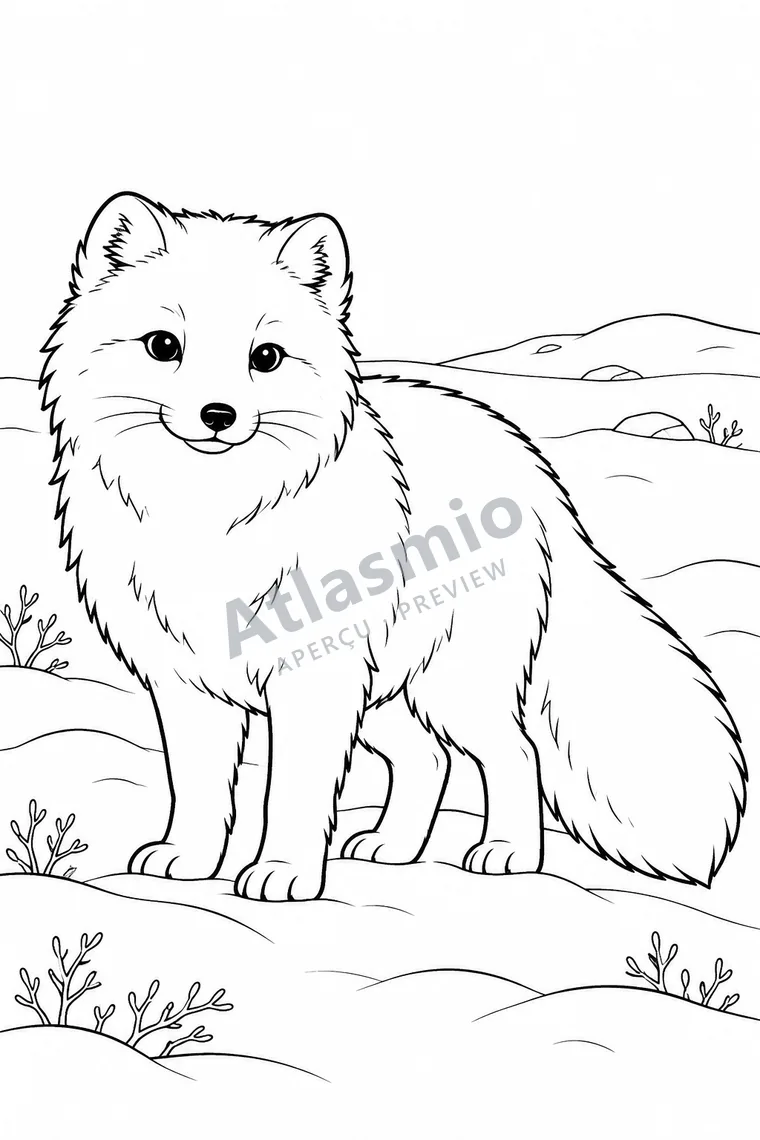
The Arctic fox explores the tundra, where trees are scarce. Its compact body, small ears and thick fur suit life in a cold northern environment.
Did you know?
Some keep a bluish-grey coat instead of turning white in winter.
Look together
How do its ears differ from a red fox’s ears?
An idea to try
Draw a small fox with rounded ears and a big bushy tail.
For the adult reading along
A little more to discover
Scientific name: Vulpes lagopus. Where it lives: Tundra and islands in the Canadian Arctic. What it eats: Small mammals, birds, eggs and other available foods. Many turn white in winter and browner in summer. A darker colour form also exists, so Arctic foxes do not all have exactly the same coat colour.
Look together: How do its ears differ from a red fox’s ears? Draw a small fox with rounded ears and a big bushy tail.
Sources and illustration notes (2)
Simplified drawing for colouring. Coat, feather or skin markings are left white so children can choose their colours. Proportions and details are not a scientific identification plate.
These links lead to other websites. Explore them with an adult. Source titles appear in their original language; some linked pages are in French.
- Parks Canada — Foxes, WapuskVulpes lagopus, relative proportions, tundra habitat and prey.
- Hinterland Who’s Who — Arctic FoxWhite and blue-grey coat forms and seasonal variation.
Source review: 2026-09-30. Illustrations are simplified for colouring.