Canadian wildlife · Drawing 15 of 41
The Canada Goose
Beside fresh water
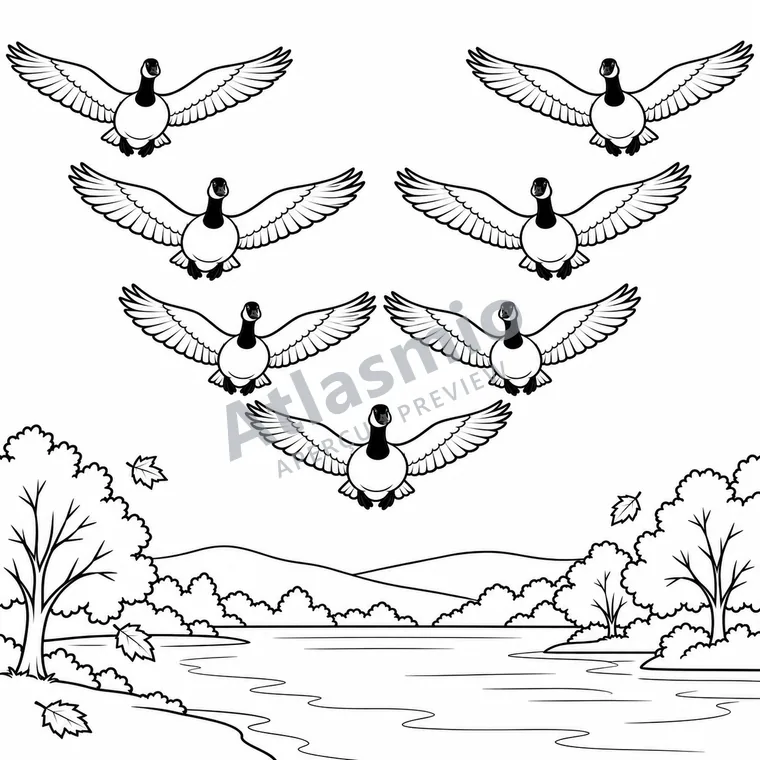
In the fall, when water and soil begin to freeze, Canada geese fly south. In the spring, they return north to build their nests.
Did you know?
In a V, following geese use the air from those ahead and tire less.
Look together
How many geese can you count in the V?
An idea to try
With an adult, arrange seven small objects in a V shape and count them.
For the adult reading along
A little more to discover
Scientific name: Branta canadensis. Fall migration begins when water and soil begin to freeze on the breeding grounds. In spring, the geese move north behind the advancing line of melting snow. Flying in a V helps save energy. The formation also lets changes in speed or direction pass quickly through the flock. Following geese benefit from air lifted by the wings of birds ahead. The leader does not get this advantage, and the birds take turns at the front.
Look together: count the seven geese, then arrange seven small objects in a V. In nature, watch Canada geese from a distance with an adult and do not feed them.
Sources and illustration notes (2)
Simplified drawing for colouring: exactly seven geese in flight, with black heads and long black necks and a white chin strap. The formation and landscape are composed for observation.
These links lead to other websites. Explore them with an adult. References identify the institution and the related lesson; some linked pages are in French.
- Hinterland Who’s Who — Canada GooseFall migration when breeding-ground water and soil freeze; spring movement behind melting snow; energy savings and rapid flock coordination in a V; distinctive head and neck markings.
- Smithsonian — How Things Fly: Why do birds fly in a V formation?Following birds use upwash from the wings ahead; the leader does not share that advantage, and birds take turns leading.
Source review: 2026-10-24. Illustrations are simplified for colouring.