Canadian wildlife · Drawing 31 of 40
American Lobster
On the coasts and in the ocean
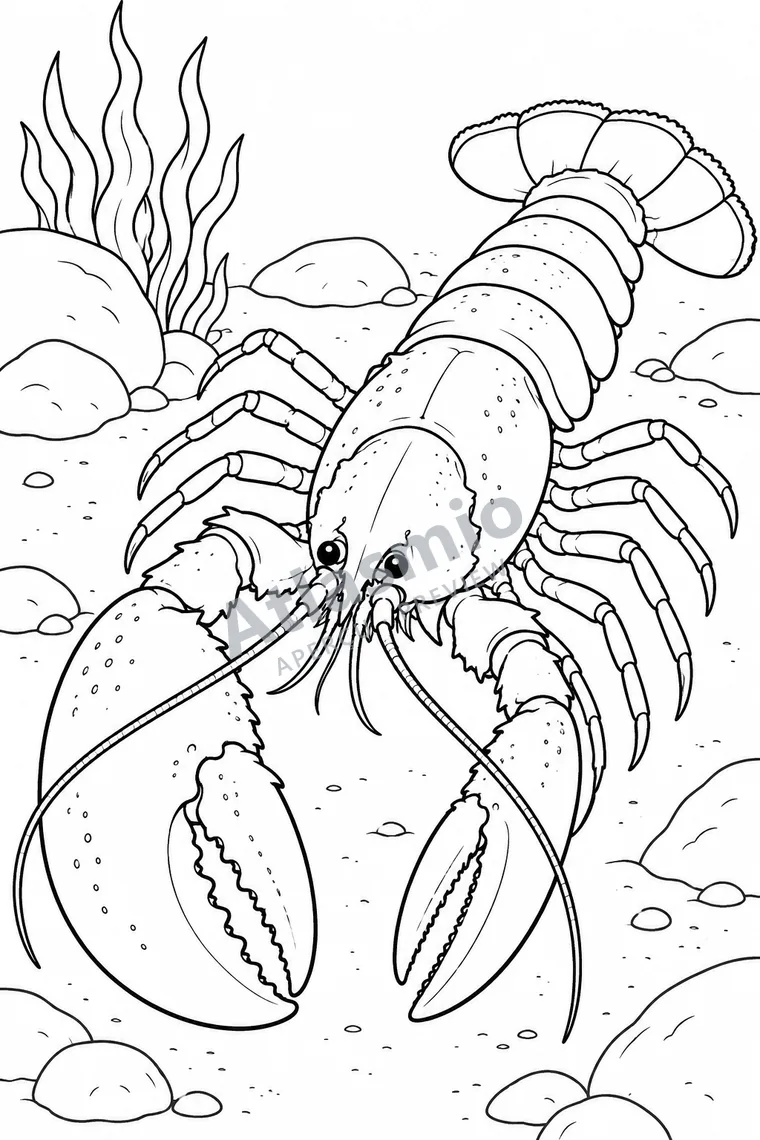
The American lobster walks along the ocean floor. Its hard shell protects its body, and two large claws help it grasp the food it finds.
Did you know?
One large claw crushes; the slimmer one cuts and tears.
Look together
Do the two large claws have the same shape?
An idea to try
Draw two claws: one broad and one narrower.
For the adult reading along
A little more to discover
Scientific name: Homarus americanus. Where it lives: Seafloor habitats in Atlantic Canada. What it eats: Shellfish, worms, fish and other animals. It replaces its hard shell as it grows, a process called moulting. A living lobster is often greenish brown, with colours varying among individuals.
Look together: Do the two large claws have the same shape? Draw two claws: one broad and one narrower.
Sources and illustration notes (2)
Simplified drawing for colouring. Coat, feather or skin markings are left white so children can choose their colours. Proportions and details are not a scientific identification plate.
These links lead to other websites. Explore them with an adult. Source titles appear in their original language; some linked pages are in French.
- NOAA Fisheries — American LobsterUnequal crusher and ripper claws, ten legs, moulting and live coloration.
- Fisheries and Oceans Canada — LobsterAnatomy, Canadian Atlantic habitat and diet.
Source review: 2026-09-30. Illustrations are simplified for colouring.