Canadian wildlife · Drawing 30 of 40
Atlantic Salmon
On the coasts and in the ocean
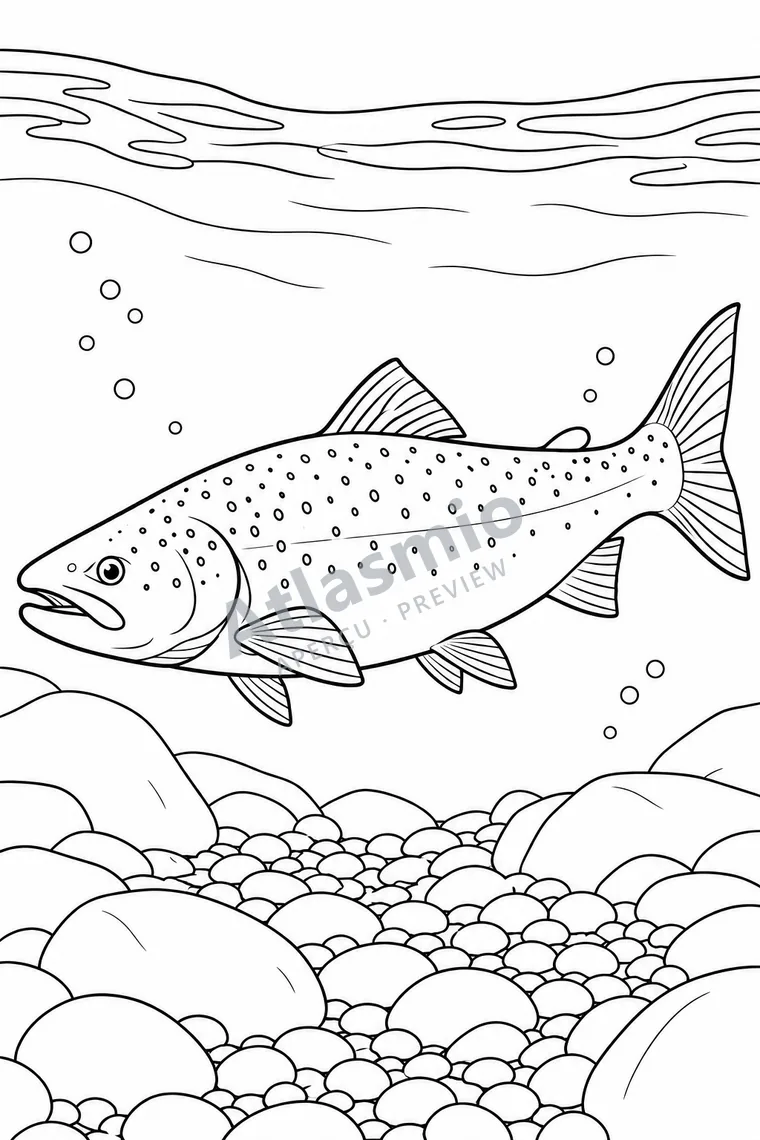
The Atlantic salmon begins life in fresh water. Many later grow in the sea and return to rivers, where females lay eggs in gravel.
Did you know?
The female uses her tail to prepare a nest in gravel.
Look together
Can you find the gravel on the bottom?
An idea to try
Draw a river meeting the sea and trace a fish’s journey.
For the adult reading along
A little more to discover
Scientific name: Salmo salar. Where it lives: Eastern Canadian rivers and the North Atlantic; also some lake populations. What it eats: Small aquatic animals; fish and crustaceans at sea. The eggs remain sheltered among the gravel. Not every Atlantic salmon goes to sea: some populations spend their lives in lakes and rivers.
Look together: Can you find the gravel on the bottom? Draw a river meeting the sea and trace a fish’s journey.
Sources and illustration notes (4)
Simplified drawing for colouring. Coat, feather or skin markings are left white so children can choose their colours. Proportions and details are not a scientific identification plate.
These links lead to other websites. Explore them with an adult. Source titles appear in their original language; some linked pages are in French.
- Fisheries and Oceans Canada — Torrent River: a salmon success storyFemale uses tail to prepare gravel nest; life cycle.
- Fisheries and Oceans Canada — Canada’s Atlantic SalmonAtlantic salmon life history and diet.
- Fisheries and Oceans Canada — Atlantic salmon life cycleFreshwater and marine diets.
- Fisheries and Oceans Canada — Landlocked Atlantic SalmonFreshwater resident populations in eastern Canada.
Source review: 2026-09-30. Illustrations are simplified for colouring.