

Provinces and Territories · Drawing 05 of 42
The red cliffs
Prince Edward Island
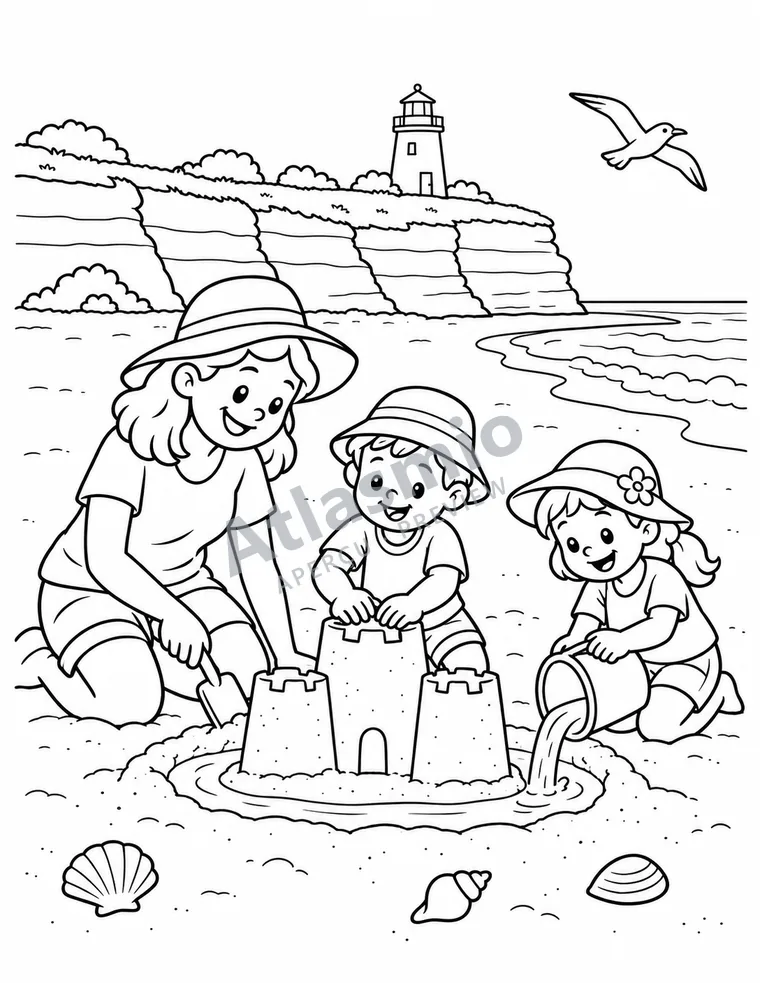
On Prince Edward Island, red cliffs line the sea. Their colour comes from iron in the rock, which rusted like an old nail!
Look together
What would you add to this sandcastle?
An idea to try
In a tray, shape a small cliff of damp sand, then gently pour water at its base: your child sees the water carry the sand away, like waves.
For the adult reading along
A little more to discover
Red sandstone cliffs line parts of Prince Edward Island’s coast. According to Parks Canada, their colour comes from hematite, a mineral formed when iron-rich minerals rusted. This crumbly sandstone is easily worn away by waves, so the shoreline keeps changing, and the sand of the national park’s beaches and dunes comes from this erosion.
The cliffs are unstable: an edge that looks solid can give way without warning. Stay back from the edge, play on the beach well away from the foot of the cliffs and keep off the dunes. The Mi’kmaq call the island Epekwitk, “something lying on the water.” Ask your child why that name suits an island.
Sources and context (3)
These links lead to other websites. Explore them with an adult. Source titles appear in their original language; some linked pages are in French.
- Parks Canada — Prince Edward Island National Park: EnvironmentRed colour from hematite, produced when iron-rich minerals in the bedrock oxidized or rusted; soft sandstone easily eroded by waves, a constantly changing coastline; sandbars, beaches and dunes formed from eroding sandstone; stay off the dunes.
- Parks Canada — Sandstone cliffs in PEI National ParkSandstone cliffs are unstable and unpredictable; crumbly sandstone and glacial till; undercut cliffs may give way unexpectedly underfoot; edges slippery when wet.
- Tourism PEI — An Island with Many NamesThe Mi’kmaq know the island as Epekwitk, meaning “something lying on the water.”
Source review: 2026-09-24. Illustrations simplify places and scenes; they are not historical documents.