

Provinces and Territories · Drawing 03 of 42
An iceberg from the North
Newfoundland and Labrador
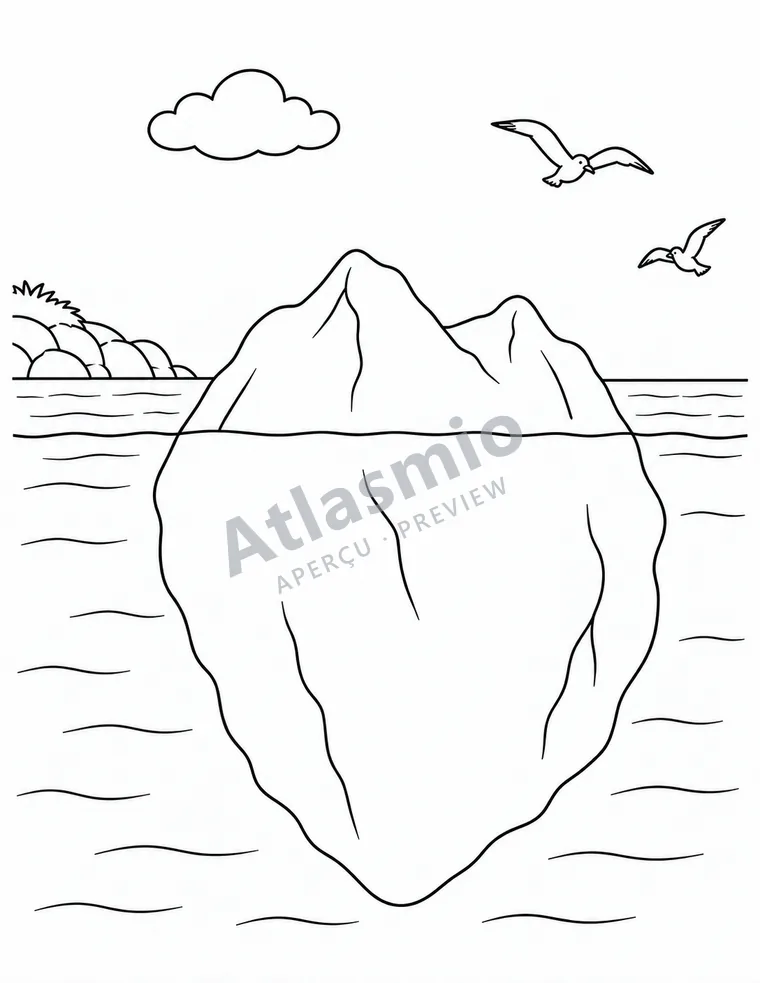
In spring, icebergs from Greenland drift along the coast. Most of an iceberg is hidden under the water!
Look together
What does this iceberg’s shape remind you of?
An idea to try
Put an ice cube in a glass of water and look together: how much floats above the water, and how much stays below?
For the adult reading along
A little more to discover
About 90% of the icebergs in Canadian waters break off glaciers on the west coast of Greenland. Carried by currents, including the Labrador Current, they take two to three years on average to reach Newfoundland. Part of their route off Newfoundland is nicknamed “Iceberg Alley.” Late May and early June are often the best times to see them from shore.
An iceberg is a piece of a glacier, not frozen seawater. Close to 90% of its volume lies below the surface; the drawing shows the water as if it were transparent. Icebergs can roll over or break apart without warning, so people admire them from land or from a safe distance. The ice cube in a glass lets your child test this idea for themselves.
Sources and context (3)
These links lead to other websites. Explore them with an adult. Source titles appear in their original language; some linked pages are in French.
- Environment and Climate Change Canada — Iceberg migration90% of Canadian icebergs originate in western Greenland; drift in the Baffin Island and Labrador currents; about 1,800 nautical miles and two to three years on average to reach Newfoundland; route often called “Iceberg Alley.”
- The Canadian Encyclopedia — IcebergIcebergs calve from glaciers, mainly west Greenland glaciers for Canada; about 0.88 of an Arctic iceberg’s volume is submerged; icebergs tilt and roll; Iceberg Alley along Newfoundland and Labrador, best seen in late May and early June.
- Newfoundland and Labrador Tourism — Iceberg ViewingLate May and early June suggested for best viewing; Iceberg Alley from the coast of Labrador to the southeast coast of Newfoundland; keep a safe distance when viewing from the water.
Source review: 2026-09-24. Illustrations simplify places and scenes; they are not historical documents.