

Canadian history · Drawing 24 of 37
Voting for the first time
1960
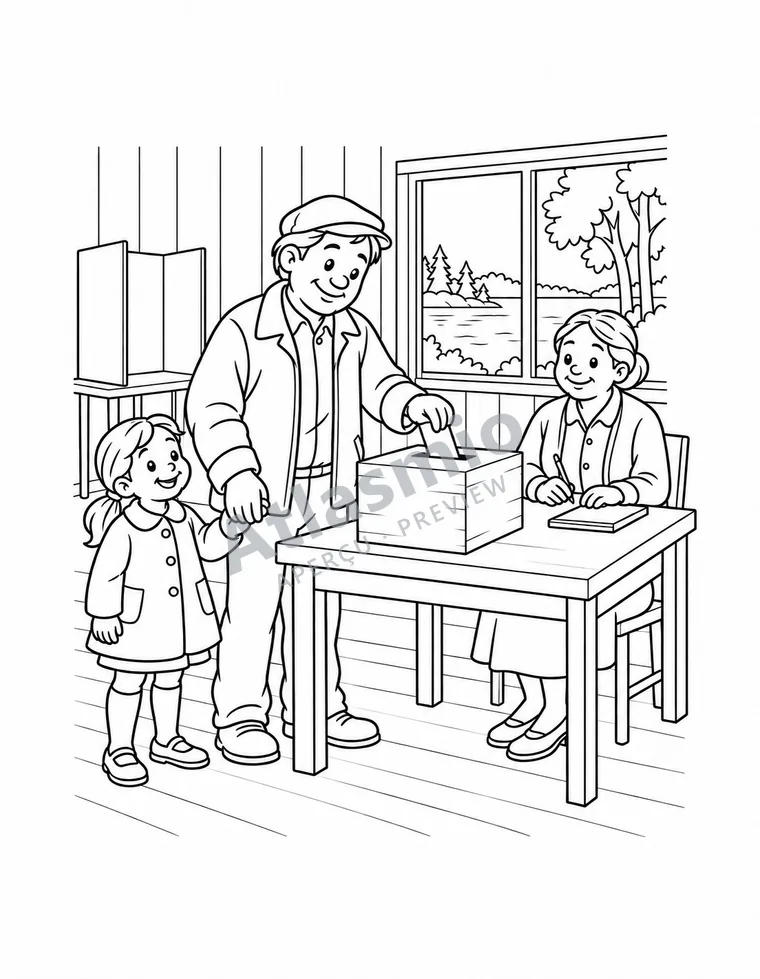
In 1960, First Nations people gained the right to vote in federal elections without losing their status. That October, at Hiawatha and Curve Lake, several people voted for the first time.
Look together
Why is it important that everyone can vote?
An idea to try
Choose tonight’s game by secret ballot: everyone folds a slip of paper and drops it in a box, then you count the votes together.
For the adult reading along
A little more to discover
Since Confederation, First Nations people had generally been able to vote in federal elections only by giving up their Indian status through “enfranchisement.” On March 31, 1960, the Canada Elections Act was amended so they could vote without losing their status. On October 31, 1960, in a by-election, members of the Hiawatha and Curve Lake First Nations in central Ontario voted for the first time. Reactions were mixed: many feared losing historic rights and status, and many nations already had their own ways of choosing leaders. Inuit had had the right to vote since 1950, but ballot boxes reached all their communities in the eastern Arctic only in 1962.
Today, the Michisaagiig of Hiawatha describe themselves as a proud, vibrant people. Talk with your child about what it means to make your voice heard.
Sources and context (3)
These links lead to other websites. Explore them with an adult. Source titles appear in their original language; some linked pages are in French.
- Elections Canada — A History of the Vote in Canada, Chapter 3Before 1960, First Nations people could vote federally only by giving up status (enfranchisement); House of Commons vote of March 10, 1960; members of the Hiawatha and Curve Lake First Nations voted for the first time on October 31, 1960; Inuit vote restored in 1950; First Nations’ own systems of governance.
- The Canadian Encyclopedia — Indigenous SuffrageOn 31 March 1960, parts of the Canada Elections Act were repealed so status Indians could vote without losing status; mixed reaction and fear of losing historic rights and status.
- Hiawatha First Nation — HomeThe Nation describes itself: “We, the Michisaagiig of Hiawatha First Nation, are a vibrant, proud, independent, and healthy people.”
Source review: 2026-09-24. Illustrations simplify places and scenes; they are not historical documents.