Dinosaurs Around the World · Drawing 27 of 34
Triceratops
North America · Late Cretaceous
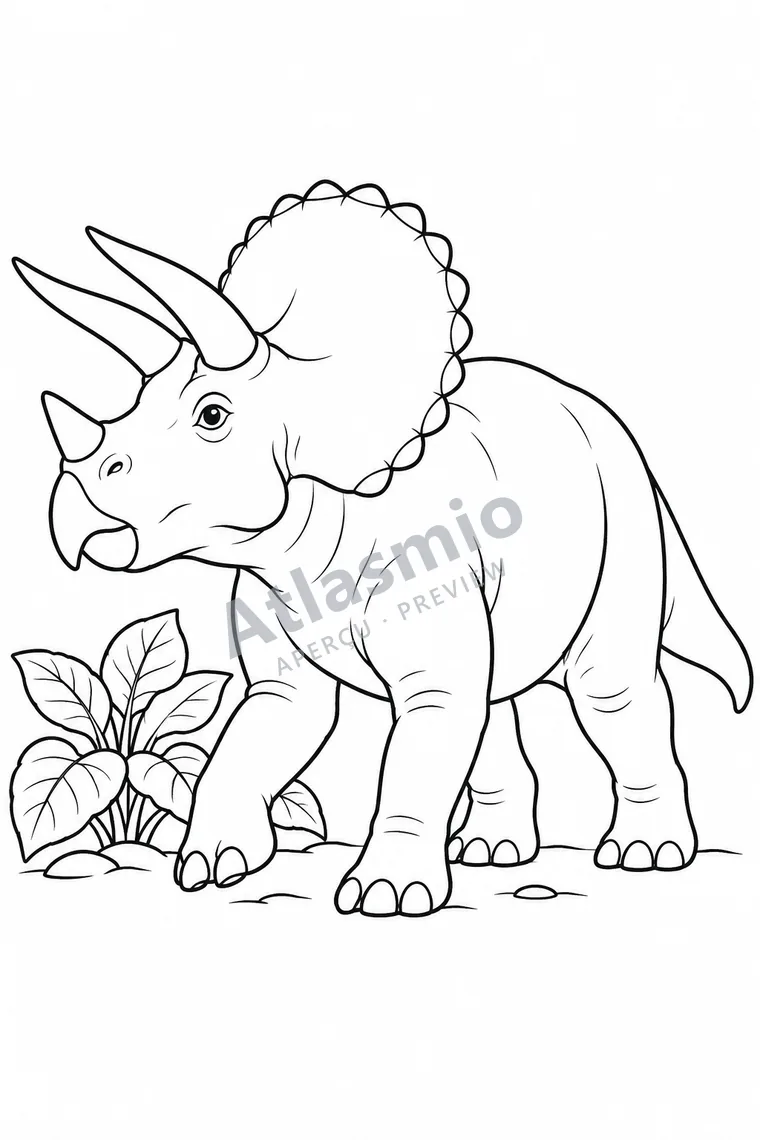
Two long horns above the eyes and another on the nose: here is Triceratops! Its beak helped it gather plants.
Did you know?
Its name means “three-horned face”.
Look together
Can you find all three horns?
An idea to try
Count the three horns with an adult.
For the adult reading along
A little more to discover
Triceratops prorsus is documented by fossils from Saskatchewan and Alberta. The Canadian Museum of Nature has studied the Canadian specimens, including a partial skull collected in Saskatchewan in 1929. The functions of its horns and frill remain topics of research.
Look together: Can you find all three horns? Count the three horns with an adult.
Sources and illustration notes (1)
Simplified reconstruction informed by fossils and scientific comparisons. The pose, colours and setting are not directly known. Animals are not drawn to the same scale.
These links lead to other websites. Explore them with an adult. References identify the institution and the related lesson; some linked pages are in French.
- Canadian Museum of Nature: Never Enough TriceratopsSee the scene’s factual text and editorial source notes.
Source review: 2026-10-04. Illustrations are simplified for colouring.