Dinosaurs Around the World · Drawing 17 of 34
Oviraptor
Asia · Cretaceous
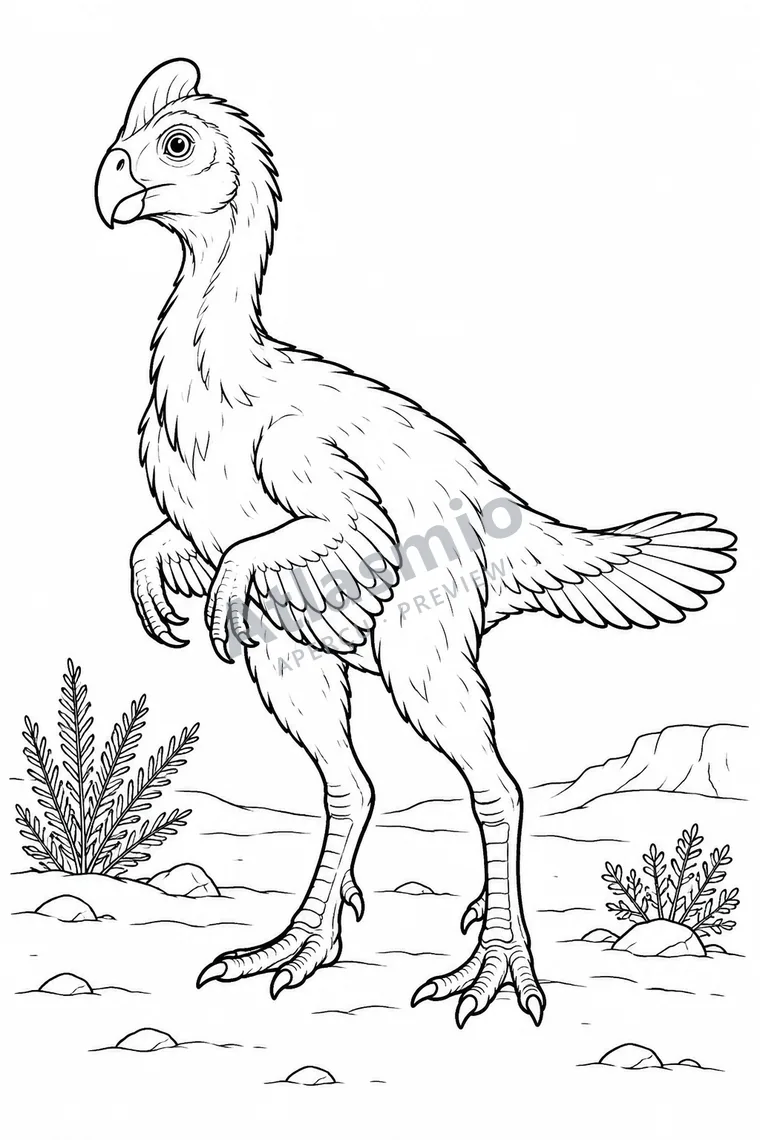
Oviraptor had a toothless beak. Its name means “egg thief,” but the name does not prove that it stole eggs.
Did you know?
New discoveries can correct an old idea.
Look together
Can you see a beak or teeth?
An idea to try
Point to the beak, then look at the head’s shape.
For the adult reading along
A little more to discover
Oviraptor philoceratops was initially associated with misidentified eggs. Later oviraptorid fossils clarified nesting behaviour. Its skull is incomplete: the illustrated crest’s complete shape is a restoration, not a certain copy of Citipati.
Look together: Can you see a beak or teeth? Point to the beak, then look at the head’s shape.
Sources and illustration notes (1)
Simplified reconstruction. Pose, unpreserved tissues and setting are interpreted. Choose your own colours; animals are not to one scale.
These links lead to other websites. Explore them with an adult. References identify the institution and the related lesson; some linked pages are in French.
- American Museum of Natural History: OviraptorExplain how new evidence can change the interpretation of a dinosaur’s name.
Source review: 2026-10-04. Illustrations are simplified for colouring.