Dinosaurs Around the World · Drawing 39 of 40
The End of the Cretaceous
Fossils and Science
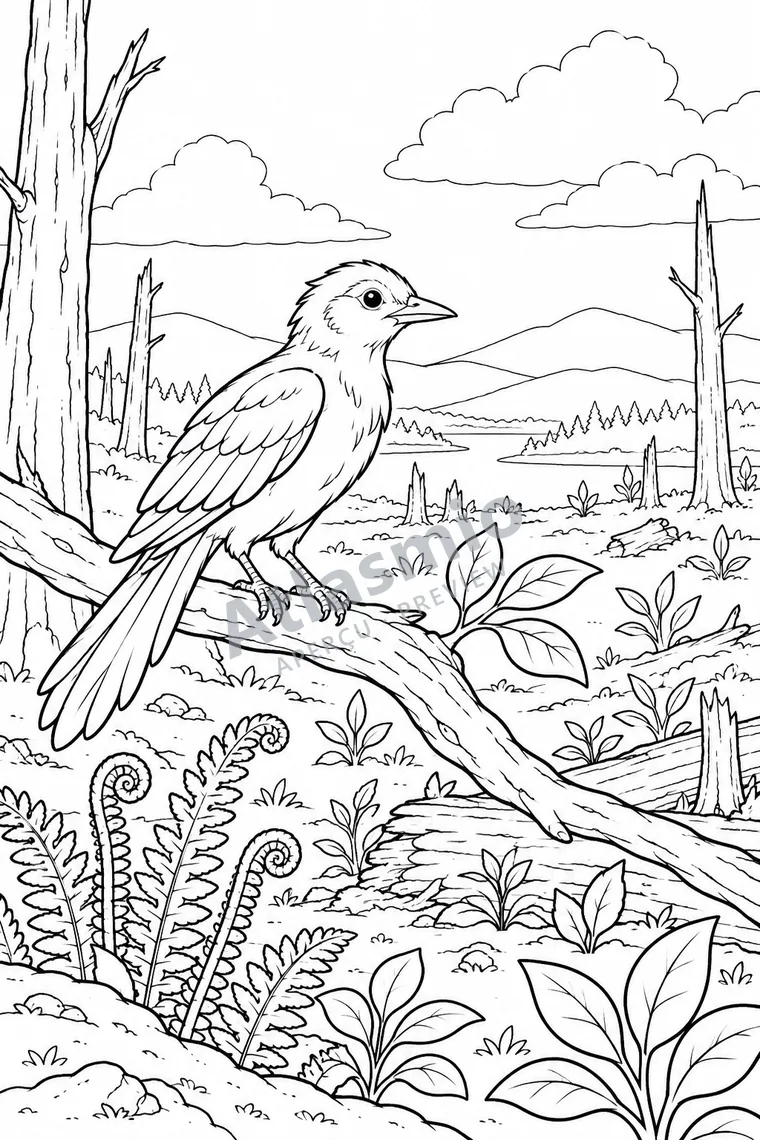
An asteroid struck Earth 66 million years ago. Non-bird dinosaurs died out, while some birds survived.
Did you know?
Many other living things were also affected.
Look together
Which living things can you find in this reconstructed landscape?
An idea to try
Discuss with an adult which clues this picture helps you explore.
For the adult reading along
A little more to discover
The Chicxulub impact is a major factor in the end-Cretaceous extinction. Climate and food-chain changes unfold over different timescales. The landscape illustrates bird survival and returning vegetation without identifying a site, exact species or recovery duration. Animals did not all die at the same instant, and not all birds survived.
Look together: Which living things can you find in this reconstructed landscape? Discuss with an adult which clues this picture helps you explore.
Sources and illustration notes (1)
Simplified reconstruction. Pose, unpreserved tissues and setting are interpreted. Choose your own colours; animals are not to one scale.
These links lead to other websites. Explore them with an adult. References identify the institution and the related lesson; some linked pages are in French.
- Natural History Museum: How an asteroid ended the age of the dinosaursThe impact 66 million years ago, environmental consequences, extinction of non-bird dinosaurs and surviving bird lineages.
Source review: 2026-10-03. Illustrations are simplified for colouring.