Dinosaurs Around the World · Drawing 15 of 40
Iguanodon
Europe · Cretaceous
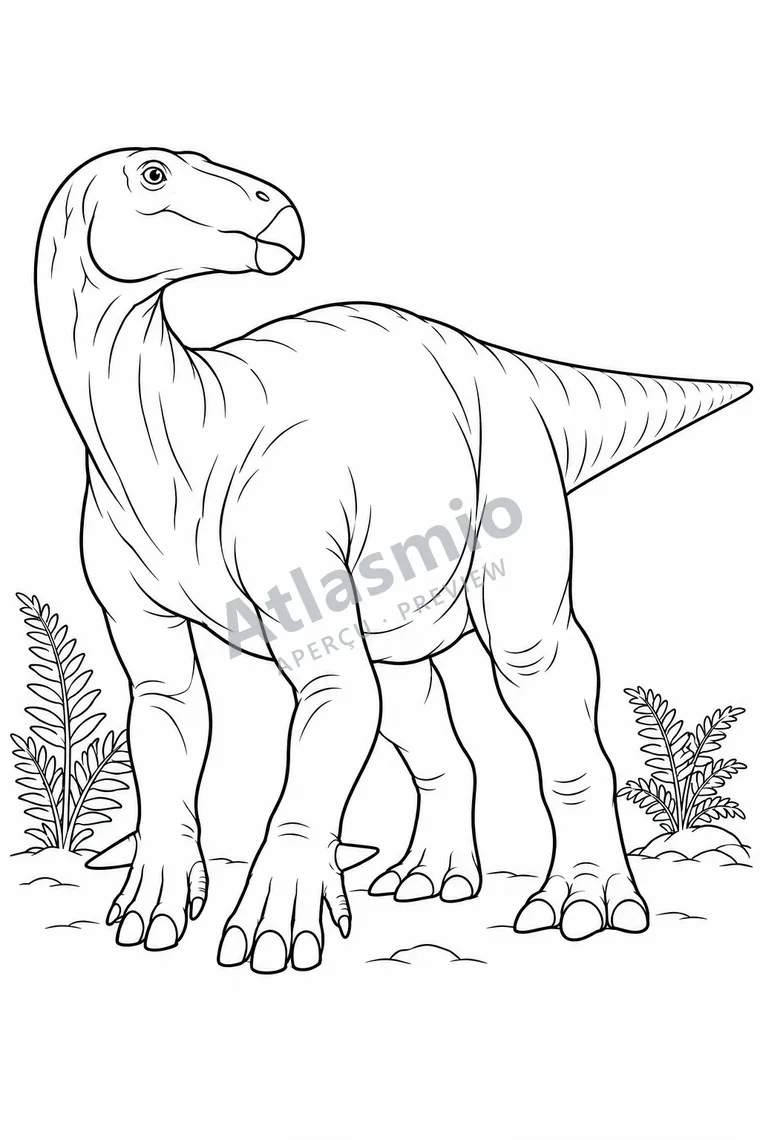
Iguanodon ate plants. Its hands carried thumb spikes. Skeletons have been found in Belgium.
Did you know?
A spike first placed on the nose was later recognized as a thumb.
Look together
What can a new discovery change?
An idea to try
Find this continent on the opening map, then compare two outlines.
For the adult reading along
A little more to discover
Iguanodon bernissartensis is known from the Bernissart skeletons. The thumb’s history illustrates revising a reconstruction using more complete fossils. An old hypothesis can show how science develops.
Look together: What can a new discovery change? Find this continent on the opening map, then compare two outlines.
Sources and illustration notes (1)
Simplified reconstruction. Pose, unpreserved tissues and setting are interpreted. Choose your own colours; animals are not to one scale.
These links lead to other websites. Explore them with an adult. References identify the institution and the related lesson; some linked pages are in French.
- Natural History Museum: IguanodonIdentify a plant-eater’s distinctive thumb spike.
Source review: 2026-10-03. Illustrations are simplified for colouring.