Canadian wildlife · Drawing 18 of 40
Pronghorn
From grasslands to mountains
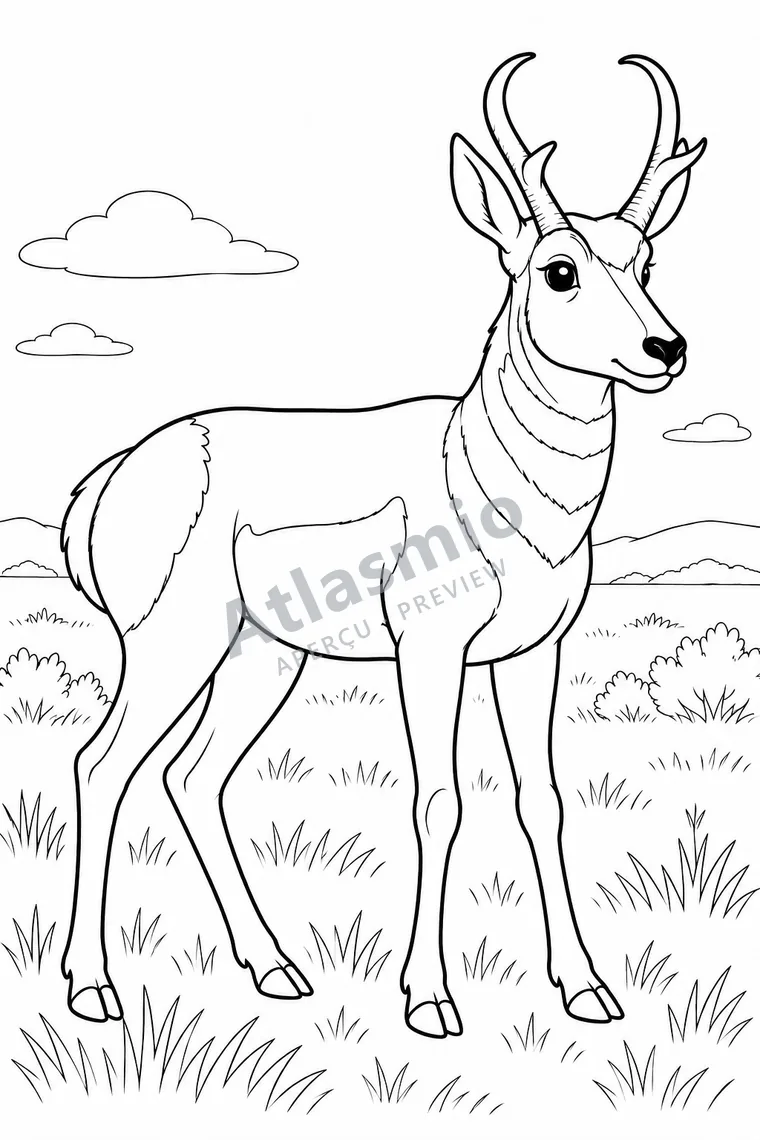
The pronghorn travels across open grasslands. Its long legs, pale belly and pronged horns give it a slender outline among the grasses of the prairie.
Did you know?
A male replaces the outer covering of his horns each year.
Look together
Can you find a little prong on a horn?
An idea to try
Draw a wide open space and a route across your prairie.
For the adult reading along
A little more to discover
Scientific name: Antilocapra americana. Where it lives: Grasslands of southern Alberta and Saskatchewan. What it eats: Herbaceous plants and shrubs. The visible horn covering surrounds a bony core that stays in place. The outer sheath falls off and regrows; it is different from a deer’s antler.
Look together: Can you find a little prong on a horn? Draw a wide open space and a route across your prairie.
Sources and illustration notes (2)
Simplified drawing for colouring. Coat, feather or skin markings are left white so children can choose their colours. Proportions and details are not a scientific identification plate.
These links lead to other websites. Explore them with an adult. Source titles appear in their original language; some linked pages are in French.
- US National Park Service — PronghornHorn sheaths shed and regrow; diet and appearance.
- Parks Canada — Ecological corridor initiativesCanadian grasslands in Alberta and Saskatchewan.
Source review: 2026-09-30. Illustrations are simplified for colouring.