

From Stadacona to the REM · Drawing 17 of 36
Families Arrive by Ship
Around 1910
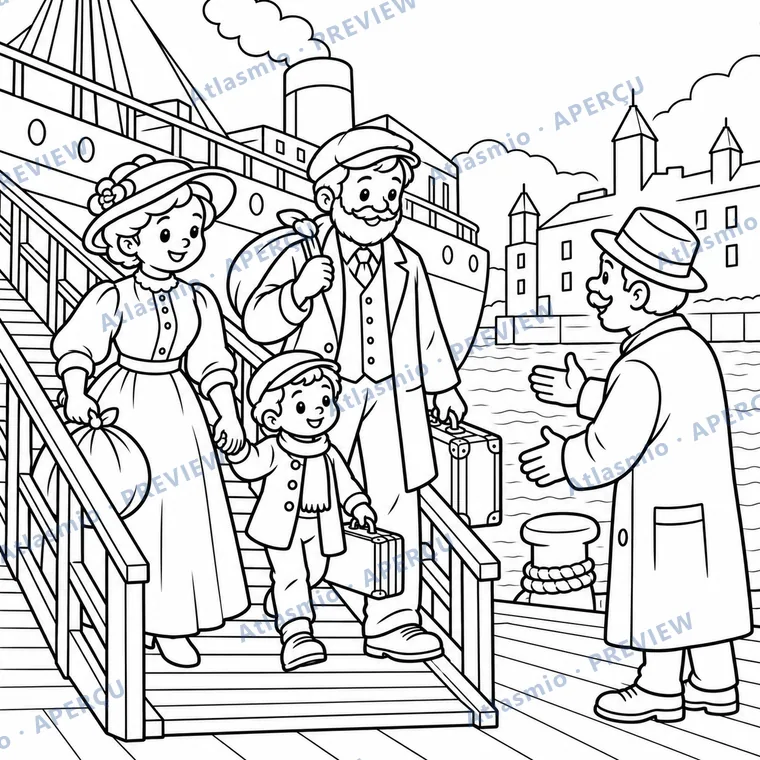
In the early 1900s, families from Europe arrived at the port of Québec with their luggage. Some stayed nearby; others travelled onward. Each family brought its own story.
Look together
What are the people carrying as they come down the gangway?
An idea to try
Imagine together that a new family has just arrived on your street after a long journey. Your child draws three ways to make them feel welcome. If your family wishes, also talk about a move or a journey made by someone close to you.
For the adult reading along
A little more to discover
Québec’s port was an important gateway for immigration to Canada in the 19th and early 20th centuries. Journeys varied: some newcomers stayed nearby, while others travelled onward. Grosse Île served as a quarantine station from 1832 to 1937.
The drawing depicts an imaginary arrival, not an identified group. Each suitcase can begin a conversation about what people leave, bring and look forward to finding.
Sources and illustration notes (2)
Imaginary family and ship; no specific arrival or national costume is reconstructed.
These links lead to other websites. Explore them with an adult. References identify the institution and the related lesson; some linked pages are in French.
- Ville de Québec — Immigration at the Port of QuébecThe Port of Québec was the main gateway for immigration to Canada until the First World War; many newcomers continued on to Ontario, the United States or the Prairies.
- Parks Canada — Grosse Île: Statistics and more statisticsGrosse Île quarantine station from 1832 to 1937; number of immigrants by period.
Page prepared on September 19, 2026. Illustrations simplify places and scenes; they are not historical documents.

This drawing is from the book Québec’s Great Moments to Colour
Tax calculated at checkout. Terms of sale