

Provinces and Territories · Drawing 31 of 42
Paddling together
British Columbia
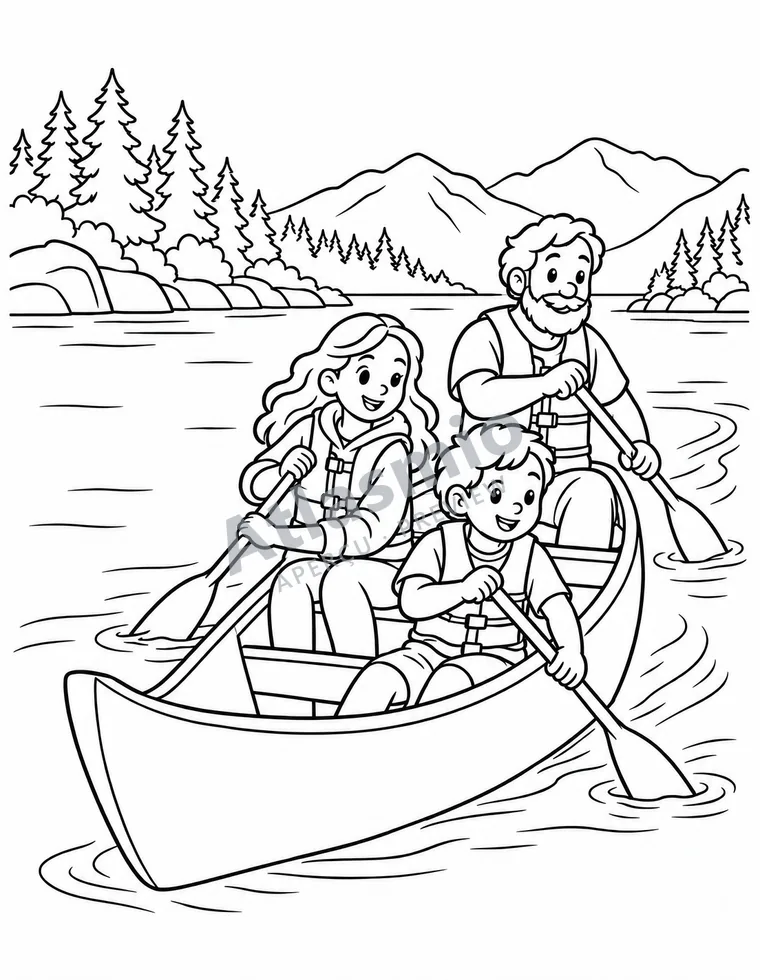
For the Squamish Nation, canoes have been important since long ago, and still are. On the water, young people paddle together and learn lessons that build strong minds and hearts.
Look together
How many paddles can you see?
An idea to try
Sit one behind the other and pretend to paddle to the same rhythm. Then talk about what helps a team move forward together.
For the adult reading along
A little more to discover
The Squamish Nation (Sḵwx̱wú7mesh Úxwumixw) speaks a language from the Coast Salish language family; most of its members live on Vancouver’s North Shore and along the Squamish River. On its website, the Nation explains that its canoe culture has existed since time immemorial, that cedar is used to make dugout ocean-going canoes, and that lessons learned on the water foster strong minds and hearts. It continues to pass its traditions on to its youth.
The Squamish Lil’wat Cultural Centre describes canoes as living beings, carved and blessed according to protocols; this page shows only paddlers on the water. To learn more, rely on the Nation’s own resources and the cultural centre’s guides.
Sources and context (3)
These links lead to other websites. Explore them with an adult. Source titles appear in their original language; some linked pages are in French.
- Squamish Nation — Our CultureCanoe culture since time immemorial; lessons learned on the water foster strong minds and hearts; cedar used for dugout ocean-going canoes; traditions passed to youth.
- Squamish Nation — About Squamish NationThe Nation’s name in its language (Sḵwx̱wú7mesh Úxwumixw); most members live on the North Shore of Vancouver and along the Squamish River; language part of the Coast Salish language family.
- Squamish Lil’wat Cultural Centre — The Community Reconciliation CanoeFor both Nations canoes are a living being; carving began with a blessing ceremony; learning protocols; canoe blessed by the Squamish Nation Canoe Family before its first journey.
Source review: 2026-09-24. Illustrations simplify places and scenes; they are not historical documents.