

Provinces and Territories · Drawing 09 of 42
To the sound of the bagpipes
Nova Scotia
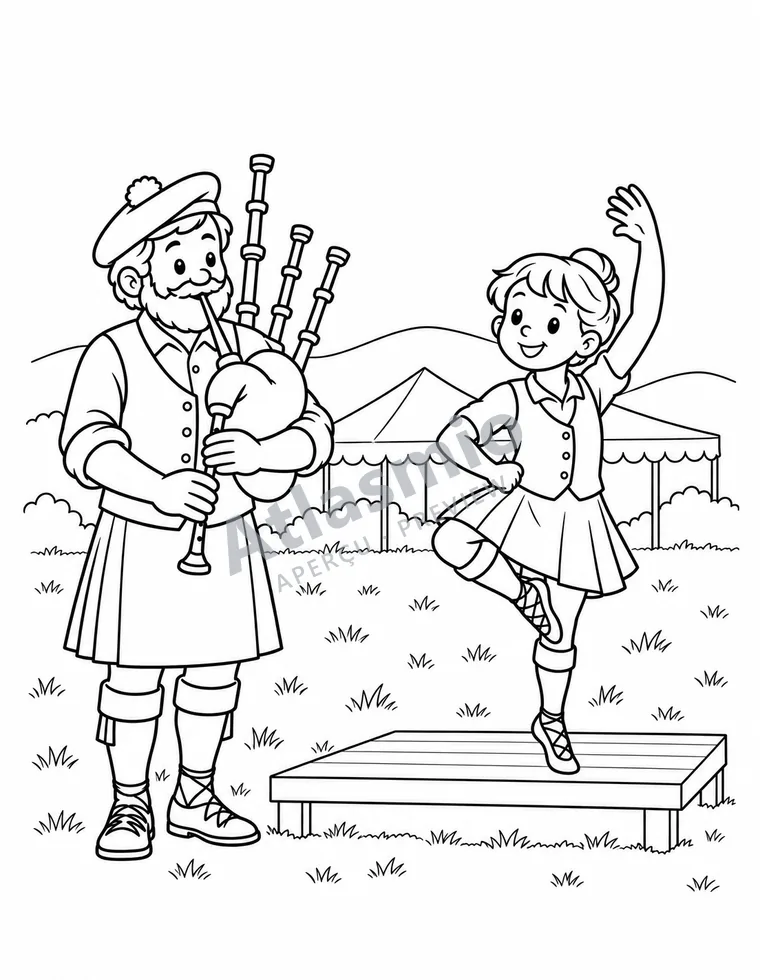
Nova Scotia means “New Scotland” in Latin, and many families here have Scottish roots. Since 1863, the Antigonish Highland Games have brought together pipers and dancers.
Look together
How many long pipes stick up from the bagpipes?
An idea to try
In a clear space, play a lively tune and invent a little step on the spot together, with one arm raised like a Highland dancer.
For the adult reading along
A little more to discover
Nova Scotia is Latin for “New Scotland”: in 1621, King James VI of Scotland granted the land to Sir William Alexander. First Nations already knew it as Mi’kma’ki. Between 1773, when the ship Hector reached Pictou, and 1855, about 50,000 Gaels from the Scottish Highlands and islands settled here. In Antigonish, the Highland Society, founded in 1861, held its first Highland Games two years later.
Today the Games feature piping and drumming, fiddling, Highland dancing, step dancing and heavy events. Count the bagpipes’ long pipes with your child, then talk about traditions your family brought from elsewhere or created here.
Sources and context (3)
These links lead to other websites. Explore them with an adult. Source titles appear in their original language; some linked pages are in French.
- Natural Resources Canada — Origin of the names of Canada and its provinces and territoriesNova Scotia is Latin for “New Scotland”; land given in 1621 by King James VI of Scotland to Sir William Alexander; First Nations knew it as Mi’kma’ki.
- Antigonish Highland Games — official website of the Antigonish Highland SocietySociety founded in 1861; first Highland Games two years later (1863) on Apple Tree Island; more than 150 Games; piping and drumming, Highland dancing, fiddle music, step-dancing, athletics and heavy events.
- Nova Scotia Archives — Gaelic Resources: IntroductionThe Hector brought the first group of Gaels to Pictou Harbour in 1773; about 50,000 Gaels settled in northeastern mainland Nova Scotia and Cape Breton between 1773 and 1855.
Source review: 2026-09-24. Illustrations simplify places and scenes; they are not historical documents.