

Provinces and Territories · Drawing 01 of 42
The beaver, symbol of Canada
Canada
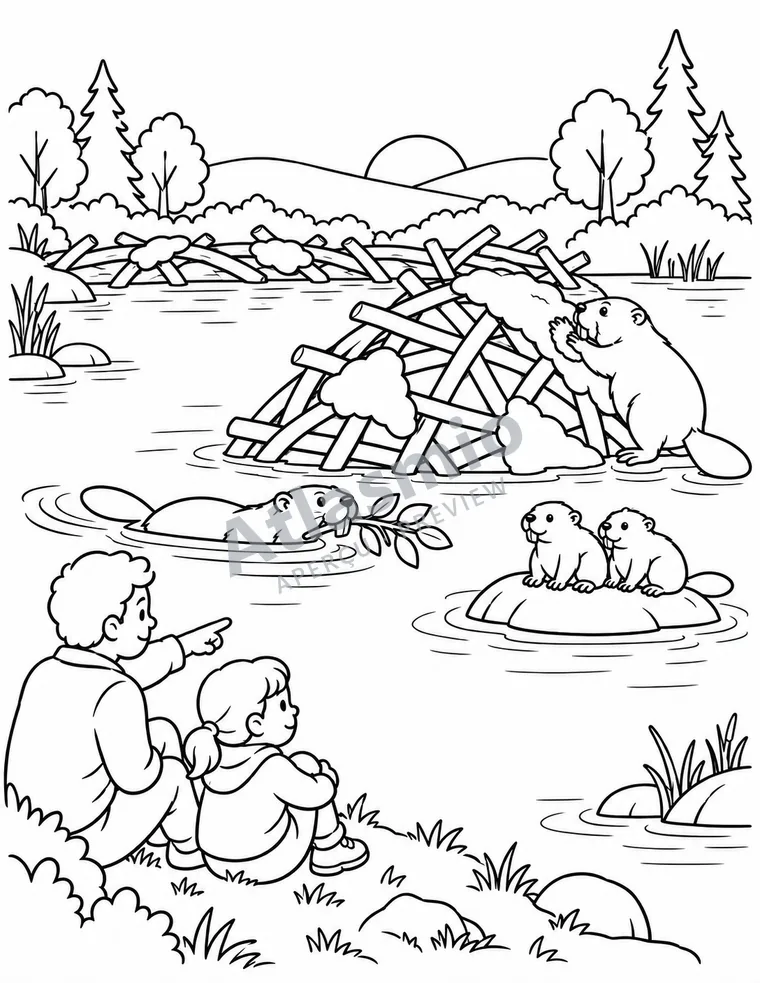
The beaver is an official symbol of Canada. Working together, beaver families build their lodge and dam from branches and mud.
Look together
How many beavers can you see?
An idea to try
On a walk, gather a few fallen twigs. Then build a small dome-shaped lodge together, like the beavers’ lodge.
For the adult reading along
A little more to discover
The beaver became an official symbol of Canada on March 24, 1975, when the National Symbol of Canada Act received royal assent. It had been an emblem long before: it was central to the fur trade from the early 17th to the mid-19th century. Indigenous peoples had long used it for clothing, food and bone tools. Nearly gone by the mid-1800s, the beaver came back thanks to protection measures.
In the drawing, the lodge has no visible door: its entrances are underwater, and the pond held back by the dam helps protect the family from predators. A colony usually includes two parents, the young from the year before and the new kits. Notice together what each beaver is doing. Beavers are most active at night, so people watch them at dusk, quietly and from a distance.
Sources and context (3)
These links lead to other websites. Explore them with an adult. Source titles appear in their original language; some linked pages are in French.
- Canadian Heritage — Official symbols of CanadaBeaver became an official symbol on March 24, 1975, when the National Symbol of Canada Act received royal assent; central to the fur trade from the 17th to the mid-19th century; Indigenous uses (fur clothing, bone tools, meat); near extinction by the mid-1800s and recovery through protection.
- Justice Canada — National Symbol of Canada Act (R.S.C. 1985, c. N-17)Section 2: the beaver (Castor canadensis) is a symbol of the sovereignty of Canada.
- The Canadian Encyclopedia — BeaverLodges and dams of sticks and mud; lodge entrances below water level; still, deep water as protection from predators; colony of two parents, yearlings and kits; flat tail, webbed hind feet; mostly active from dusk to dawn.
Source review: 2026-09-24. Illustrations simplify places and scenes; they are not historical documents.