

Canadian history · Drawing 27 of 43
Coupons for sugar
1942
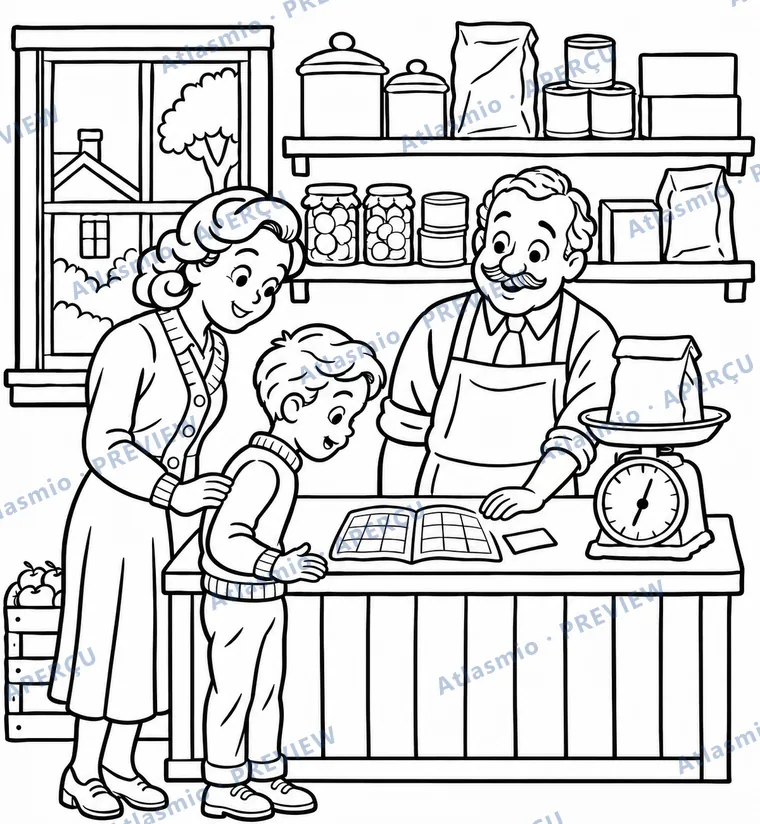
In 1942, during the Second World War, Canada limited how much sugar people could buy. At the grocery store, shoppers paid for the sugar and handed over a coupon from a ration book.
Look together
Can you spot the coupon next to the ration book?
An idea to try
Draw a booklet with six pretend coupons. Imagine you use two at the grocery store. How many are left? Talk about the difference between paying for something and showing a ration coupon.
For the adult reading along
A little more to discover
Wartime rationing helped share limited supplies and make food available for the armed forces and allies. Canada introduced ration books in 1942, and sugar was among the first foods to be rationed. Most adults and children received their own books. To buy a rationed item, shoppers paid for it and handed over coupons for the amount they bought.
Coffee, tea and butter were also rationed during the war. Which goods were rationed and how much people could buy changed over time. Look at an original ration book from the Canadian War Museum with a child and compare it with the one on the counter.
Sources and illustration notes (2)
A parent and child look at the open ration book on the counter. A loose coupon sits beside it, and a bag of sugar rests in the scale pan. The people and store are imagined. The booklet’s boxes suggest the coupons used at the time.
These links lead to other websites. Explore them with an adult. References identify the institution and the related lesson; some linked pages are in French.
- Canadian War Museum — Ration Book and Meat TokensRation books introduced in 1942, goods that were rationed and how shoppers used coupons.
- Canadian War Museum — The Home FrontRationing and daily life in Canada during the Second World War.
Page prepared on November 7, 2026. Illustrations simplify places and scenes; they are not historical documents.
This drawing is from the book Canada’s Great Moments to Colour
Tax calculated at checkout. Terms of sale