

Canadian history · Drawing 18 of 37
A petition for the vote
1916–1918
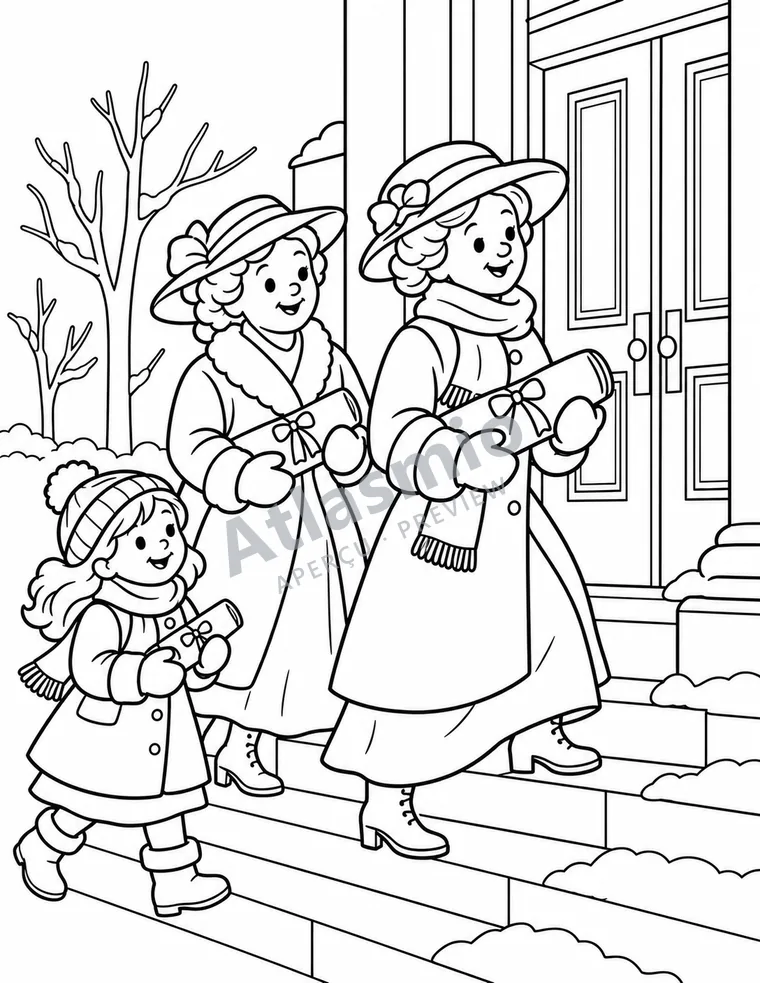
In 1916, after a big petition, Manitoba women were the first in Canada to win the right to vote in their province. In 1918, many women won the right to vote in federal elections.
Look together
What would you ask for in a petition?
An idea to try
Hold a family vote on a small choice, such as tonight’s story. Before voting, make sure everyone has had a chance to speak.
For the adult reading along
A little more to discover
Manitoba’s Political Equality League, founded in 1912, campaigned with a famous mock parliament and petitions. In December 1915, suffragists gave Premier Tobias Norris a petition with tens of thousands of signatures. On January 28, 1916, Manitoba women became the first in Canada to win the right to vote and to run in provincial elections; Saskatchewan and Alberta followed in March and April. On May 24, 1918, most women aged 21 and over gained the federal vote.
Not all women: racist rules kept many Asian Canadians from voting until the late 1940s, and First Nations people won the federal vote without losing their status only in 1960. Some suffragists held racist views, and the Famous Five of the 1929 Persons Case, which opened the Senate to women, are criticized for supporting eugenics laws. Talk with your child about fairness: who gets to take part when a group makes a decision?
Sources and context (4)
These links lead to other websites. Explore them with an adult. Source titles appear in their original language; some linked pages are in French.
- Elections Canada — A History of the Vote in Canada, Chapter 2Manitoba Political Equality League founded in 1912; December 1915 petition of 45,000 names presented to Premier Tobias C. Norris; January 1916, Manitoba women first to win the provincial vote; May 24, 1918 royal assent for women’s federal vote (age 21 or older, not alien-born).
- Elections Canada — A History of the Vote in Canada, Chapter 3Racial exclusions from the vote removed in the late 1940s (1948 federally); before 1960, First Nations people could vote only by giving up their status, except veterans; on March 10, 1960, the federal vote without giving up status.
- The Canadian Encyclopedia — Women’s Suffrage in Canada1914 mock parliament; 28 January 1916 in Manitoba, followed by Saskatchewan (14 March) and Alberta (19 April); 24 May 1918 for female citizens aged 21 and over not excluded on racial or Indigenous grounds; Asian Canadians in 1948, all Indigenous people in 1960; Prairie suffragists’ views of Anglo-Celtic superiority.
- The Canadian Encyclopedia — Persons CaseOn 18 October 1929, the Judicial Committee of the Privy Council ruled that women could be appointed to the Senate; criticism of the Famous Five for supporting laws that led to forced sterilizations.
Source review: 2026-09-26. Illustrations simplify places and scenes; they are not historical documents.