Canadian dinosaurs · Drawing 16 of 32
Styracosaurus
Alberta · Late Cretaceous
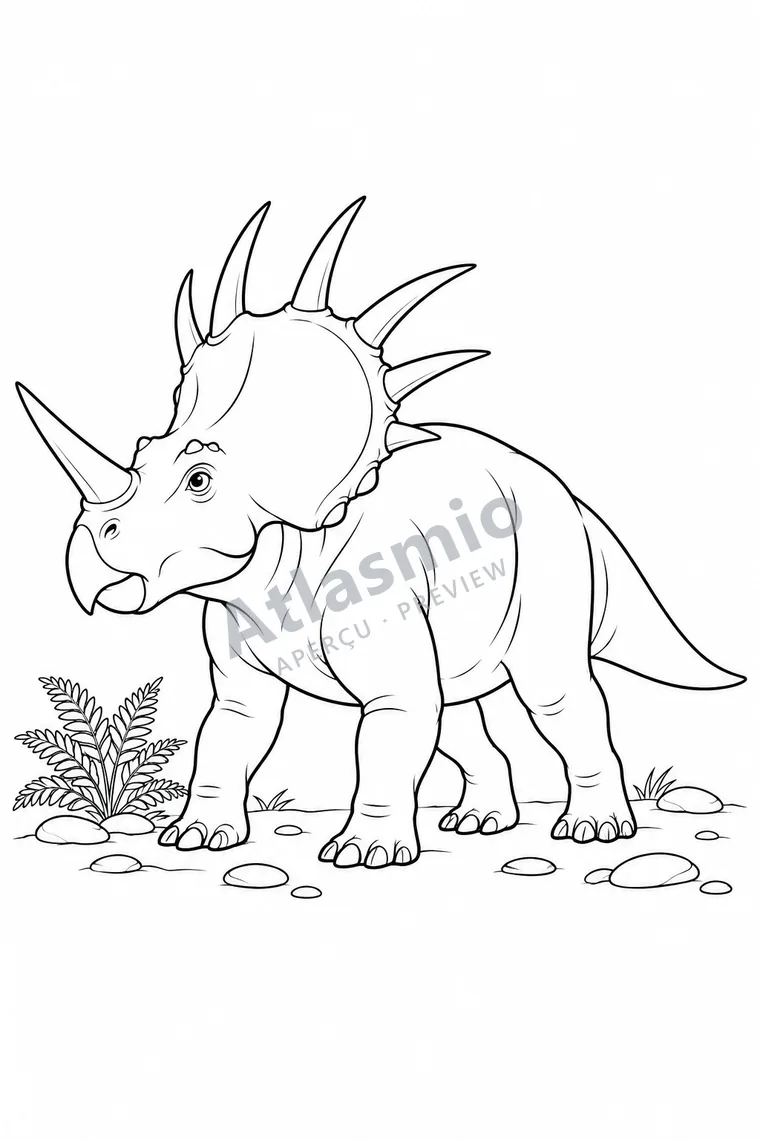
Styracosaurus had a large horn on its nose and long spikes around its frill. Despite this impressive appearance, it ate plants.
Did you know?
A famous skull was discovered in Alberta in 1913.
Look together
Which point is on its nose?
An idea to try
Choose one colour for the frill and another for the spikes.
For the adult reading along
A little more to discover
Styracosaurus albertensis is a ceratopsian. The reference skull held by the Canadian Museum of Nature was found near Alberta’s Red Deer River in 1913. Horns and frills varied between individuals; this drawing simplifies their shapes.
Look together: Which point is on its nose? Choose one colour for the frill and another for the spikes.
Sources and illustration notes (2)
Simplified reconstruction informed by fossils and scientific comparisons. The pose, colours and setting are not directly known. Animals are not drawn to the same scale.
These links lead to other websites. Explore them with an adult. Source titles appear in their original language; some linked pages are in French.
- Natural History Museum: StyracosaurusSee the scene’s factual text and editorial source notes.
- Canadian Museum of Nature: Palaeobiology CollectionsSee the scene’s factual text and editorial source notes.
Source review: 2026-10-02. Illustrations are simplified for colouring.